
Anti-Slip Flooring Standards
Regulatory framework for assessing slip resistance in Spain
The Spanish Technical Building Code (CTE), through Basic Document DB-SUA, establishes the safety requirements relating to the risk of falls.
To assess the slip resistance of flooring, UNE EN 16165 is applied, which sets out the test methods currently in force.
Slip Resistance Classes Required by CTE DB SUA According to Flooring Location
Spanish Technical Building Code (CTE) – DB SUA
The Basic Document on Safety in Use and Accessibility (DB-SUA) defines the minimum requirements to reduce the risk of falls on flooring surfaces.
DA DB SUA/3
Guidance document used to correctly interpret the technical requirements included in the CTE.
UNE EN 16165
Standard that sets out the methods currently in force for determining slip resistance, including the pendulum method and other standardised procedures.
Classifications and Applications Under Current Standards
Since its publication, the Spanish Technical Building Code has undergone several revisions, in which the referenced testing standards have changed:
- UNE ENV 12633:2003, obtaining the Rd value (slip resistance).
- UNE 41901:2017 for wet testing.
- UNE 41902:2017 for dry testing.
- UNE EN 16165:2022, Annex C / National Annex A, as the latest method included.
These test methods are carried out using the friction pendulum, an instrument designed to measure the slip resistance coefficient (Rd). Based on the results obtained, flooring surfaces are classified into four categories: C0, C1, C2 and C3.
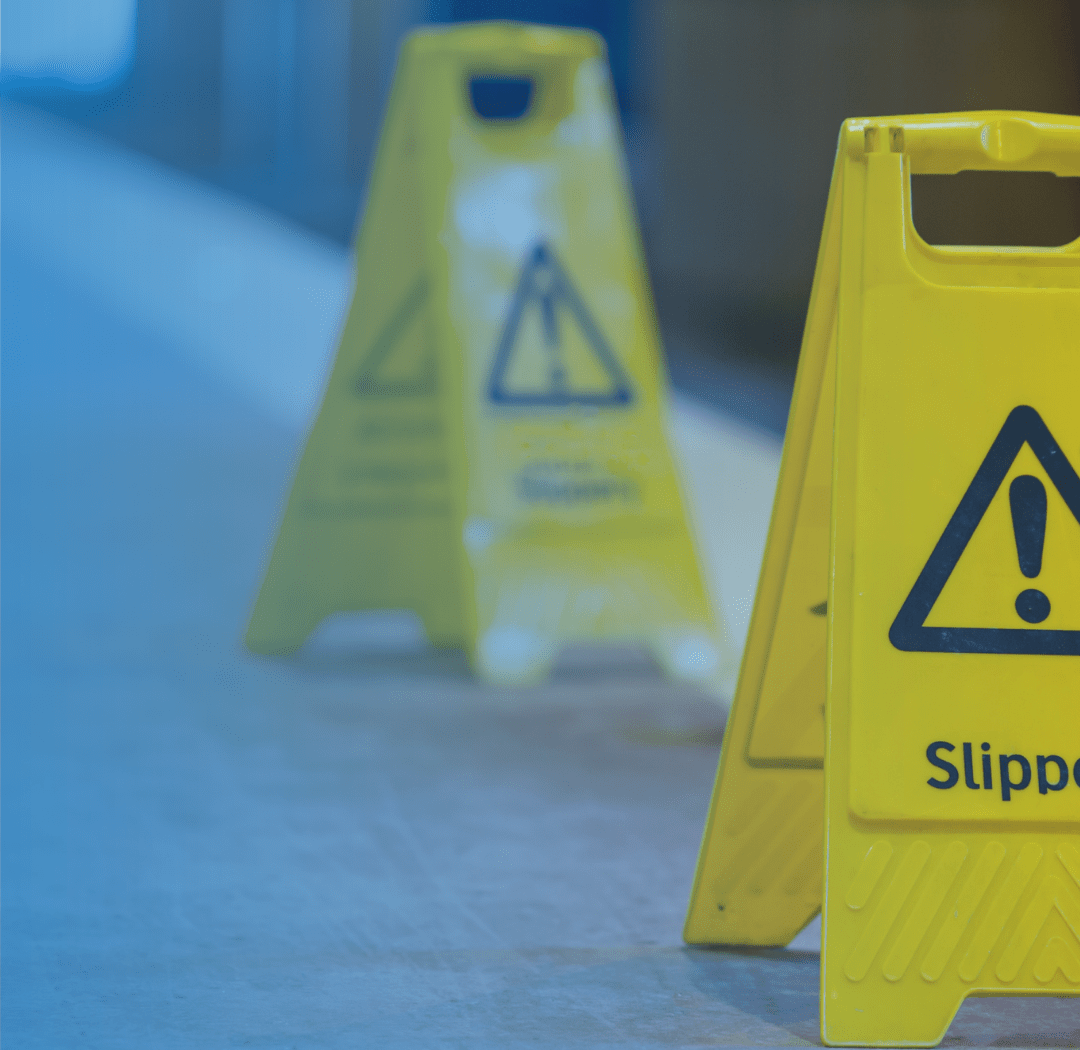
Slip Resistance Classes Required by CTE DB SUA According to Flooring Location
| Location and characteristics of the flooring | Class |
|---|---|
| Dry indoor areas | |
| – Surfaces with a slope of less than 6% | 1 |
| – Surfaces with a slope of 6% or more, and stairs | 2 |
| Wet indoor areas, such as building entrances from outdoor spaces, covered terraces, changing rooms, bathrooms, toilets, kitchens, etc. | |
| – Surfaces with a slope of less than 6% | 2 |
| – Surfaces with a slope of 6% or more, and stairs | 3 |
| Outdoor areas. Swimming pools. Showers. | 3 |
Notes:
(1) Except where these are direct access points to restricted-use areas.
(2) In areas intended for barefoot users, and on the bottom of swimming pools, in zones where the depth does not exceed 1.50 m.
FAQ on Slip Resistance and Flooring Classification
What is flooring slip resistance?
Flooring slip resistance refers to the degree of slipperiness a surface may present under normal conditions of use. It is assessed using standardised methods, such as the friction pendulum test.
What characterises Class 0 floors?
They have the lowest level of slip resistance. Their use is generally limited to dry indoor areas with no additional safety requirements.
Where are Class 1 floors used?
They are used in indoor areas with a low risk of slipping.
What advantage do Class 2 floors offer?
Class 2 floors are widely used in areas such as toilets, kitchens and indoor spaces where safety must be ensured while also supporting ease of cleaning.
And what is the advantage of Class 3 floors?
Class 3 flooring offers the highest level of slip resistance (above 45). It is ideal for hazardous areas such as swimming pools, showers and outdoor spaces.
How do you choose the right flooring?
It depends on the intended use and the environmental conditions. Our tests provide objective data to support and simplify that decision.